Into the Field: Site Visit to W.A. Ranches for Smart Precision Agriculture
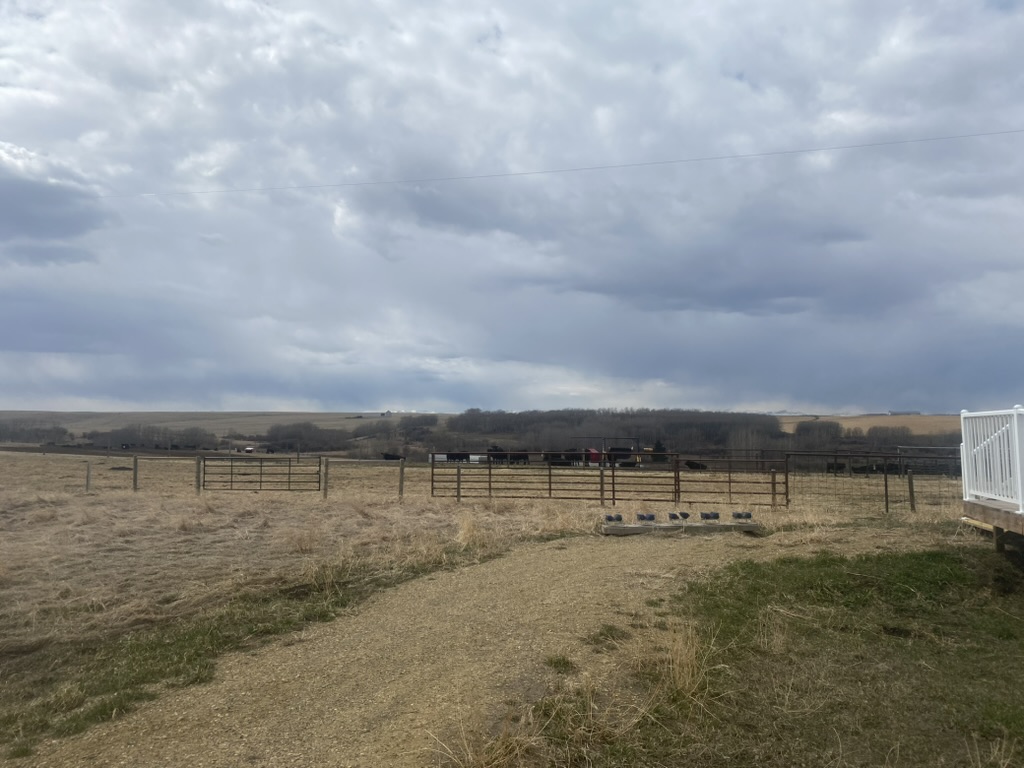
On April 29, 2026, our team headed out to W.A. Ranches — a 19,000-acre working research ranch situated approximately 40 km northwest of UCalgary’s Main Campus, primarily northeast of the town of Cochrane, operated by the University of Calgary’s Faculty of Veterinary Medicine. It was a clear spring day, the kind that makes Alberta feel generous, and a great setting for a first real look at where our precision agriculture research will take root.
The visit was tied to our CFI JELF iNOI submission for the project “Smart Precision Agriculture & Environmental Monitoring Infrastructure using UAV Remote Sensing and Ground IoT Sensors.” W.A. Ranches is the primary real-world deployment site for the proposed infrastructure, and we wanted to see the land firsthand before committing to any deployment plan.
Dr. Sara Saeedi led our team, joined by Kan and Yasaman. Our host was Dr. Ed Pajor — Director of W.A. Ranches and the Anderson-Chisholm Chair in Animal Care and Welfare at UCalgary — who walked us through both the Home and East sites with patience and real enthusiasm for where this could go.
A Ranch Built for Research
W.A. Ranches is not a test plot. It is a fully operational cow-calf ranch — gifted to UCalgary in 2018 — that doubles as a living research platform for agriculture, animal welfare, and environmental science. The diversity of the land is one of its strengths: hay, barley, cover crops, and swath grazing fields sit alongside open pastures, giving us a range of crop types and management scenarios to work with rather than a single controlled setting.
Two Sites Worth Knowing
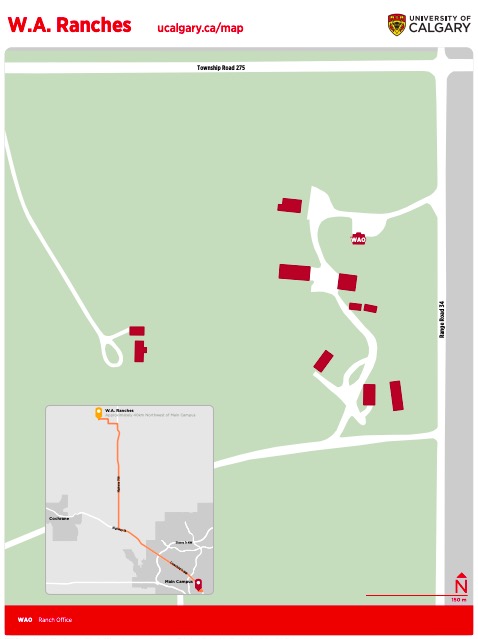
The Home Site is where the daily rhythm of the ranch plays out — livestock care facilities, sheltered structures for winter, and the spaces where young animals are brought in during calving and lambing season. The existing buildings here are a practical asset for equipment staging and year-round continuity.
The East Site has a dedicated lab and meeting room, which makes it a natural base for field campaigns. It sits close to the agricultural fields, so it is easy to move between data review and fieldwork on the same day. It is also a strong candidate for an edge computing node — a local hub for data aggregation before anything moves to the cloud.
What We Came Away With
The visit gave us what we came for: ground truth. We confirmed that vehicle access to both sites is workable, that the field extents suit UAV coverage, and that the mix of crop types and pastures creates a genuinely rich monitoring environment. We also learned about Dr. Pietoniro’s existing soil moisture mesonet on the ranch — a potential complementary data layer worth exploring collaboratively.
A full connectivity and power assessment still needs to happen before we finalize the sensor network design, but that is the expected next step rather than a surprise.
Most importantly, Dr. Pajor confirmed W.A. Ranches’ role as our primary field partner. His letter of support — signed May 3, 2026 — was a meaningful milestone for the team, and we are grateful for it.
Acknowledgements
We are sincerely grateful to Dr. Ed Pajor and the entire W.A. Ranches team for their warm welcome and generous hospitality during our visit. Dr. Pajor walked us through both the Home and East sites, explained how the ranch manages its seasonal operations across multiple crop and pasture types. His openness — and his willingness to formally support the project through a letter to the CFI JELF committee — made this next step possible.
W.A. Ranches is a remarkable place, and we feel fortunate to have it as our primary field partner. We look forward to a long and productive collaboration — and to being back in the field in June.
Enjoy Reading This Article?
Here are some more articles you might like to read next: